Guide to OEM Furniture Manufacturing in China
OEM (Original Equipment Manufacturing) allows brands, retailers, and distributors to sell furniture under their own label without owning a factory. China remains the world's largest furniture export hub, offering scale, skilled labor, and integrated supply chains. For first-time importers and experienced buyers alike, understanding how OEM partnerships work is essential to controlling cost, quality, and delivery timelines.
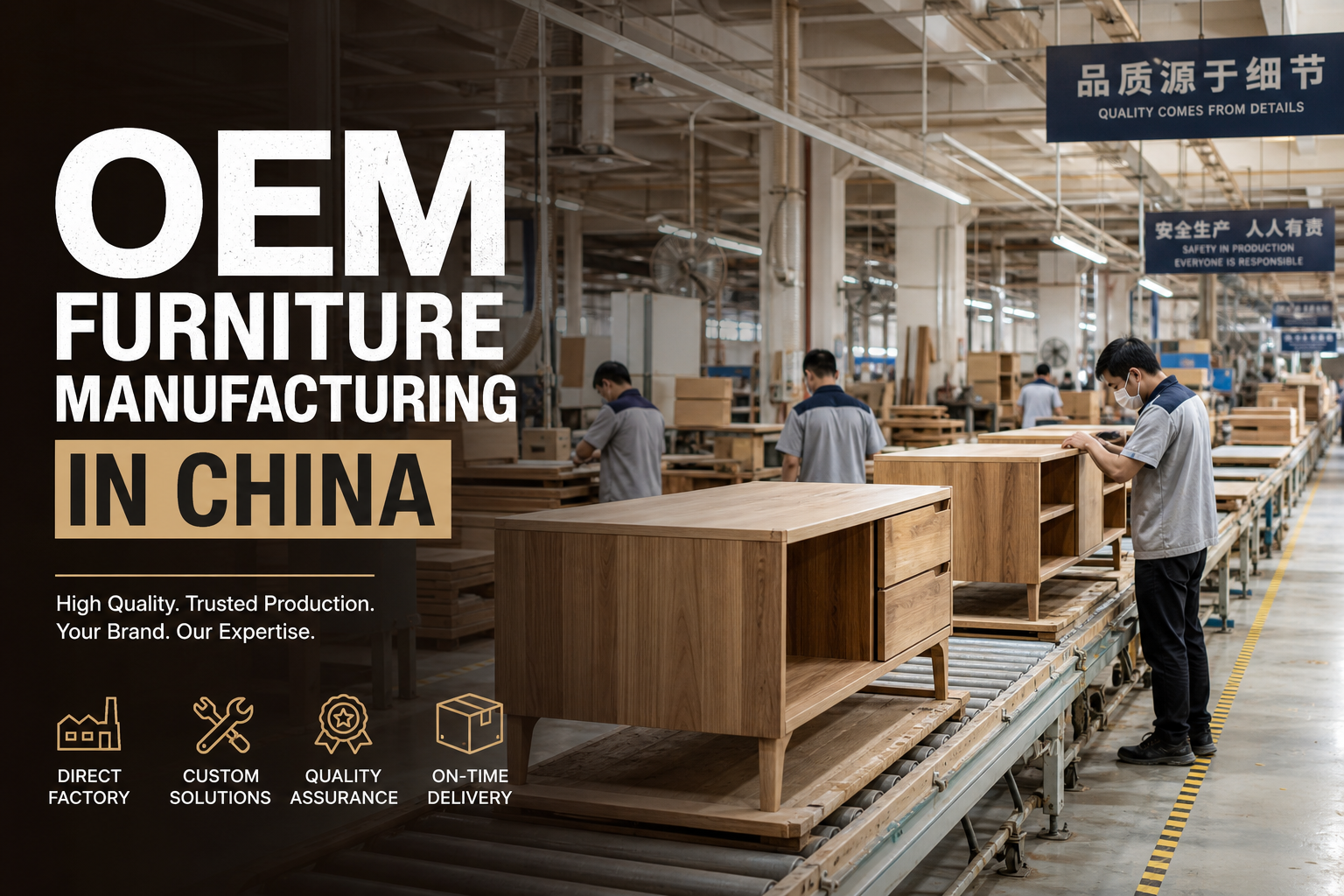
What OEM Furniture Manufacturing Means
In an OEM arrangement, you provide the design, brand, and specifications. The factory manufactures to your drawings and applies your labeling and packaging. You own the product identity; the factory provides production capacity. This differs from buying ready-made catalog items, where the factory's design becomes your SKU with minimal customization.
Typical OEM Scope
OEM projects can include custom dimensions, material substitutions, hardware selection, finish colors, carton branding, and instruction manual localization. The more variables you change from a factory's base model, the higher the sampling cost and MOQ negotiation complexity.
Choosing the Right OEM Factory
Not every furniture exporter is a strong OEM partner. Evaluate factories on category specialization, export experience to your target market, certification records, and communication responsiveness. A dining chair specialist may struggle with upholstered sectionals; match factory capability to your product type.
OEM vs Catalog Buying Comparison
| Factor | OEM Custom | Catalog / Ready-Made | Best For |
|---|---|---|---|
| MOQ | Higher (often 100–500+ per SKU) | Lower (mixed containers OK) | Brand differentiation vs speed |
| Tooling Cost | May require jigs or molds | Usually none | Unique designs vs cost control |
| Lead Time | 60–120 days typical | 30–45 days typical | Planned seasons vs urgent fill-ins |
| Margin Potential | Higher if design is exclusive | Lower, more competition | Private label growth |
The OEM Development Process
Most successful OEM projects follow a structured timeline. Start with a technical brief and target FOB price. The factory quotes material options and MOQ tiers. Pre-production samples validate construction, finish, and packaging. After approval, deposit triggers bulk material procurement. Production runs are followed by pre-shipment inspection before balance payment and container loading.
Sample Stages Explained
Proto samples confirm design intent using simplified processes. Pre-production (PP) samples use bulk-line materials and approved finishes—they are your last checkpoint before thousands of units roll off the line. Never skip PP approval on new OEM SKUs.
Tooling, Jigs, and Setup Fees
Some OEM orders require new cutting dies, bending molds, or sewing templates. Clarify who owns tooling after payment. Reputable factories often amortize small jig costs into unit pricing rather than charging large upfront fees. For plastic or metal components, mold ownership and maintenance terms should be written into your agreement.
Quality Control for OEM Orders
OEM products carry your brand reputation. Implement inspection at three stages when possible: incoming raw material checks, in-line production audits, and pre-shipment inspection (PSI). Third-party agencies like SGS, BV, or Intertek provide standardized reports accepted by many retailers. Define acceptable defect rates (AQL) before production starts.
Pricing and Payment Terms
FOB pricing is standard for Chinese furniture exports—you pay through port of loading. Common terms are 30% deposit and 70% before shipment, though established buyers may negotiate better ratios. Always tie final payment to passing inspection results, not just factory claims of completion.
Logistics and Compliance
Confirm HS codes, fumigation requirements for solid wood, and destination-market testing needs (CARB, EN 717, UK Fire Regs for upholstery). Your OEM factory should provide material breakdowns for customs and compliance documentation. Flat-pack design reduces freight cost but requires clear assembly instructions in your customer's language.
OEM manufacturing in China rewards prepared buyers. Invest time in factory vetting, clear specifications, and disciplined QC—and you gain a scalable supply base that grows with your brand.
Scaling OEM Programs Over Time
After a successful first OEM launch, consolidate component platforms across SKUs to reduce tooling duplication. Negotiate annual volume forecasts in exchange for priority scheduling and locked material pricing. Strong OEM relationships often evolve into co-development partnerships where factories propose cost-down engineering without sacrificing your design intent.