Quality Control Checklist for Imported Furniture
Quality failures in imported furniture are expensive—container rework, retailer chargebacks, warranty storms, and brand damage far exceed inspection costs. A structured QC program protects importers sourcing from China at every production stage. This checklist outlines inspection points, sampling standards, and documentation practices used by professional B2B buyers and third-party agencies.
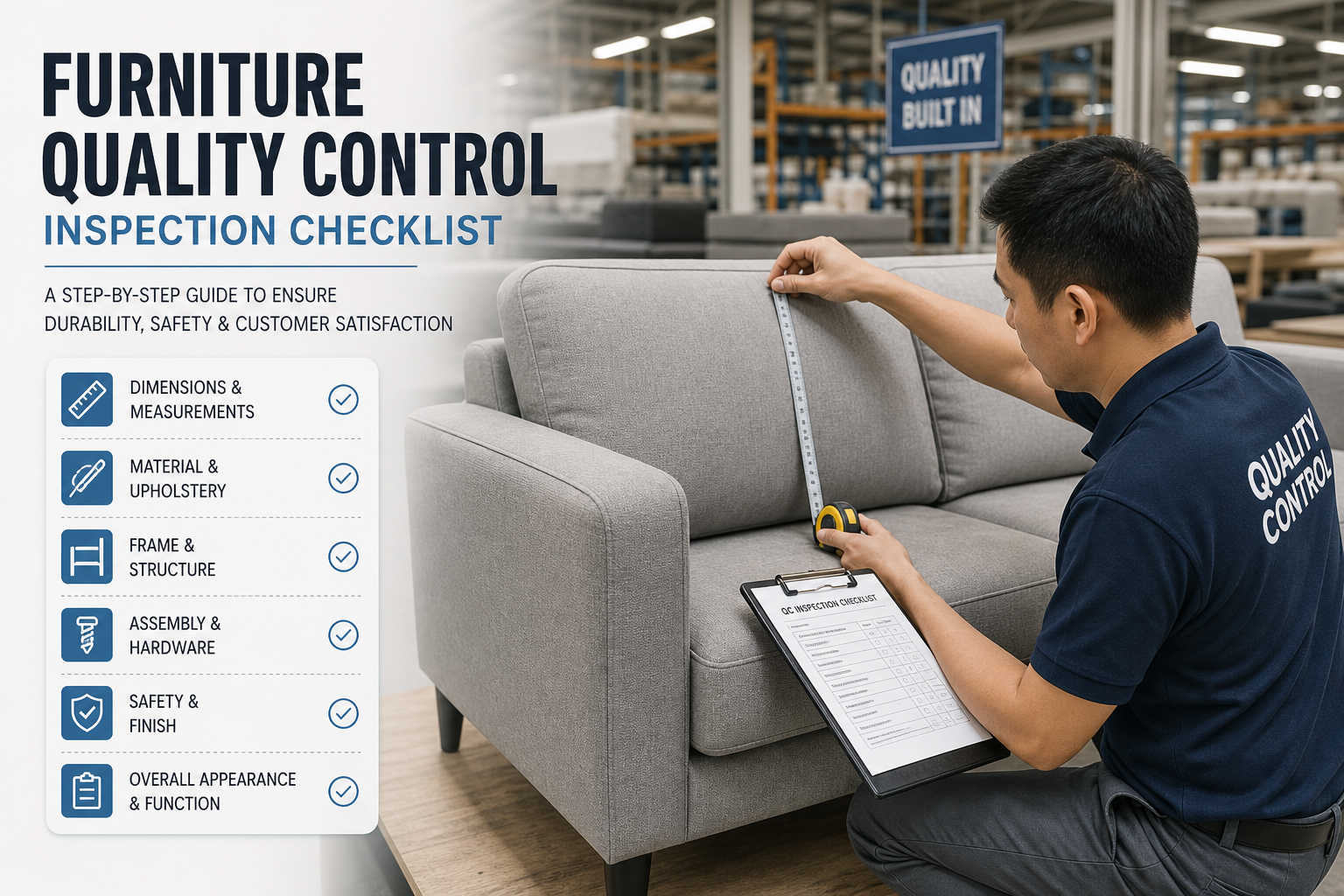
When to Inspect
Effective QC spans three stages: pre-production (material and sample verification), in-line (mid-production spot checks), and pre-shipment inspection (PSI) before final payment. Skipping early stages and relying only on PSI catches defects too late for efficient correction. Budget inspection costs into every PO above $10,000 USD.
Pre-Production Inspection (PPI)
Confirm bulk materials match approved sample specs: wood grade, panel E0/E1 certificates, fabric lot numbers, hardware brands, and finish color panels. Verify BOM against signed specification sheet. PPI prevents wrong material procurement that no final inspection can fix economically.
Pre-Shipment Inspection Essentials
PSI occurs when 100% of goods are packed and at least 80% complete (AQL industry practice). Inspectors verify quantity, workmanship, function, dimensions, labeling, and packaging. Random sampling follows AQL tables—typically Level II, AQL 2.5 for critical defects and 4.0 for major/minor in furniture categories.
Furniture QC Checklist by Category
| Check Point | Chairs / Seating | Case Goods / Tables | Pass Criteria |
|---|---|---|---|
| Structure / Stability | Base wobble, gas lift cycle | Joint tightness, level feet | No visible wobble under load |
| Finish Quality | Scratch, color match | Veneer bubble, edge band | Within approved sample panel |
| Dimensions | Seat H +/- 5mm | Overall L/W/H vs drawing | Within tolerance on spec |
| Packaging | Carton drop, hardware kit | Panel edge protection | ISTA or buyer spec met |
Defect Classification
Critical: Safety hazards—sharp exposed metal, structural failure, tip-over risk on chests without anchoring hardware. Zero tolerance; any critical defect fails shipment.
Major: Functional or aesthetic issues a customer would return—wrong color at scale, broken mechanism, significant finish damage on visible surfaces.
Minor: Small blemishes acceptable at defined AQL rates—internal drawer marks, faint scratches on non-visible areas.
Document Defects with Evidence
Photo and video each defect with SKU label visible. Reference PO line item and carton number. Inspection reports without visual evidence carry little weight in payment disputes or factory rework negotiations.
Functional Testing Procedures
Test drawers and doors through 10 open-close cycles. Apply rated weight to chairs and desks. Check castor rolling on hard and soft surfaces. For flat-pack, perform partial assembly on sampled units to verify hole alignment and hardware completeness. Sit-stand desks require full up-down cycle and anti-collision check.
Quantity and Label Verification
Count cartons against packing list. Spot-open cartons across production dates—not only the first pallets presented. Verify barcodes, SKU labels, instruction manual language, and country-of-origin marks match destination requirements.
Handling Failed Inspections
Define remedies in contract: rework, sort-and-replace, price discount, or cancel with deposit refund terms. Never authorize shipment with open critical or major defects without written acceptance of risk. Re-inspection after rework should be at factory cost.
Working with Third-Party Inspectors
Book agencies (SGS, BV, Intertek, QIMA) at least 5 business days before requested date. Provide approved sample, spec sheet, PO, and packing list. Attend inspection virtually or in person for first orders with new factories. Compare agency reports against your own sample side-by-side when disputes arise.
A disciplined QC checklist turns imported furniture from a gamble into a managed process. Invest in inspection before final payment—the cost is negligible compared to a rejected container at your warehouse door.
Integrating QC Data into Supplier Reviews
Log every inspection result by factory and SKU category. Track defect trends over time—recurring finish issues signal process problems, while isolated packaging failures may indicate seasonal staffing gaps. Share trend summaries with factories during quarterly business reviews to drive continuous improvement and stronger long-term partnerships.