Ergonomic Office Furniture Buying Guide for B2B Importers
Hybrid work and corporate wellness programs have accelerated demand for ergonomic office furniture worldwide. Importers sourcing from China face a wide quality spectrum—from task chairs that fail after six months to BIFMA-tested systems suitable for Fortune 500 deployments. This guide helps B2B buyers specify, evaluate, and import ergonomic office furniture that meets commercial standards and end-user expectations.
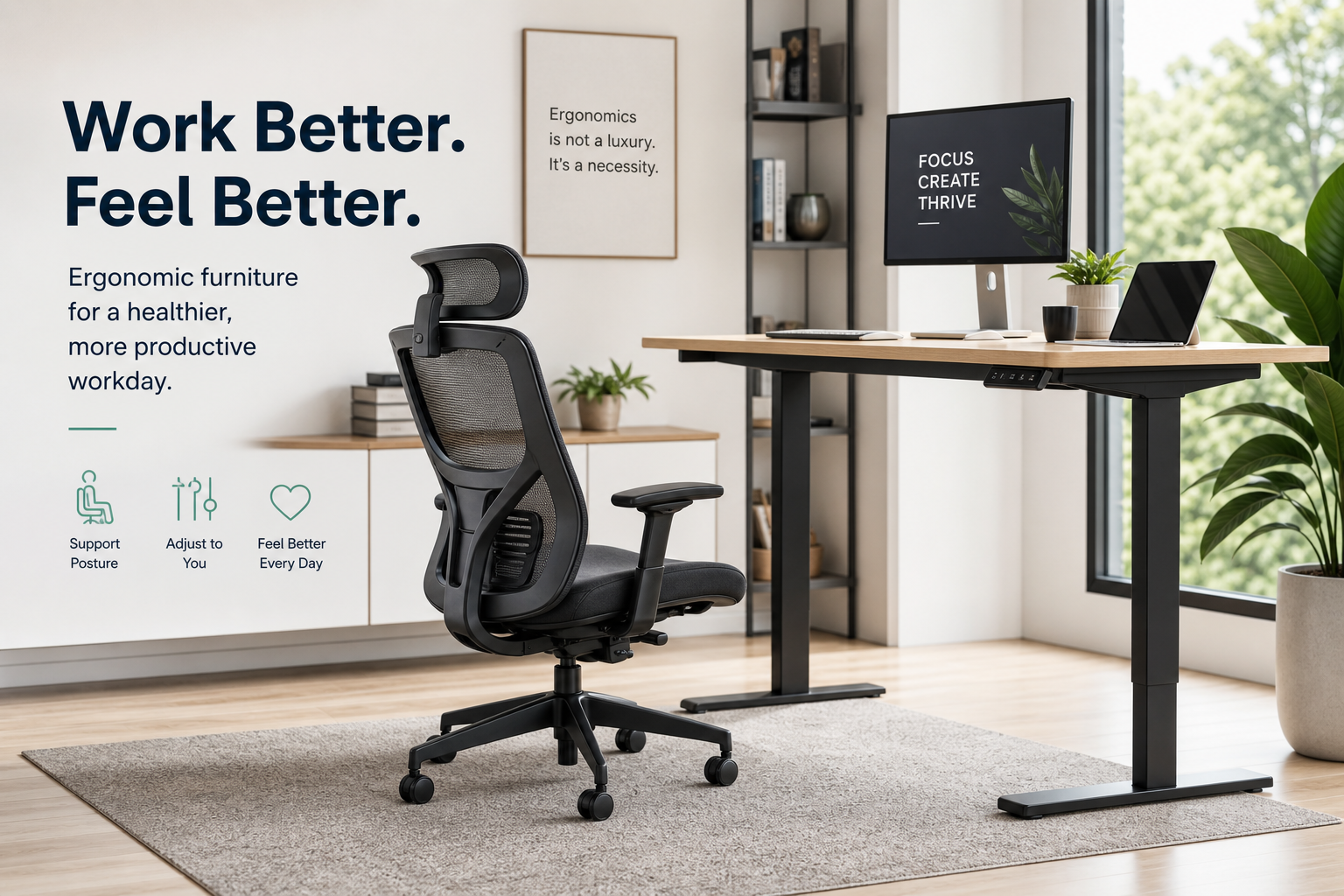
What Defines Ergonomic Office Furniture
Ergonomic furniture supports neutral body posture, adjustability, and sustained comfort over full workdays. Key categories include task chairs with lumbar support, sit-stand desks, monitor arms, keyboard trays, and footrests. For B2B procurement, ergonomics must combine user adjustability with commercial-grade durability—residential specs rarely survive 40-hour weekly office use.
Commercial vs Residential Grade
Commercial ergonomic chairs use higher-density foam, class-4 gas lifts, reinforced bases, and upholstery rated for 100,000+ double rubs. Residential chairs may look similar but fail warranty claims in corporate settings. Always request component spec sheets, not just marketing brochures.
Essential Chair Specifications
Specify seat height range, seat depth adjustment, lumbar support type (fixed vs adjustable), armrest adjustability (2D, 3D, 4D), tilt mechanism, and weight capacity. Mesh backs require quality elastomer or woven tension that retains shape. Sync-tilt mechanisms improve dynamic sitting but add cost—match feature set to target price tier.
Ergonomic Product Specification Matrix
| Component | Entry Commercial | Mid-Tier | Premium |
|---|---|---|---|
| Gas Lift | Class 3 | Class 4 | Class 4 + safety cert |
| Armrests | Fixed or 1D | 2D–3D adjustable | 4D pivot + slide |
| Desk Adjustability | Manual crank | Electric single motor | Dual motor + memory |
| Warranty Expectation | 3–5 years | 5–7 years | 10+ years (tier 1 brands) |
Standards and Certifications
BIFMA X5.1 (chairs) and BIFMA X5.5 (desks) are baseline structural tests for North American commercial markets. EN 1335 series applies in Europe. Gas lifts should meet ANSI/BIFMA or DIN EN 16955. Electrical sit-stand desks need CE, UL, or SAA depending on destination. Request test reports from accredited labs—not factory self-declarations.
Sit-Stand Desk Considerations
Electric desks require reliable motors, anti-collision sensors, and stable leg frames at max height. Two-motor systems handle wider tops with less wobble. Specify load capacity including monitor arms and equipment. Cable management trays and grommets are expected in corporate specs—include them in OEM drawings.
Batch Testing Recommendation
For orders above 500 units, conduct cycle testing on gas lifts and desk motors from bulk production. Sample fatigue tests on chair mechanisms prevent widespread field failures that trigger costly warranty programs.
Sourcing Ergonomic Furniture from China
Zhejiang, Guangdong, and Anhui host major office furniture clusters with export experience. Evaluate factories on BIFMA test capability, component sourcing (Taiwan or self-produced gas lifts), and OEM programs for international brands. Visit production lines to confirm they run commercial-spec BOMs, not downgraded export versions.
Packaging and Assembly for Office Projects
Knock-down chair and desk cartons reduce freight but require efficient assembly for large corporate rollouts. Some importers pre-assemble at regional warehouses. Include tool kits, spare casters, and labeled parts. Project orders may need phased delivery schedules aligned with fit-out timelines.
Volume Pricing Tiers
Ergonomic programs above 1,000 units often qualify for component upgrades at the same price tier—better casters, thicker mesh, or extended warranty. Negotiate tier breakpoints during initial quoting rather than after the first container ships.
Ergonomic office furniture is a specification-driven category. Importers who define standards clearly, verify test documentation, and align factory capability with commercial grade win long-term contracts with dealers, facility managers, and e-commerce platforms serving the modern workplace.
After-Sales Support for Commercial Deployments
Corporate rollouts require spare parts planning—gas lifts, casters, arm caps, and control boxes for sit-stand desks. Negotiate spare parts pricing and MOQ in your initial OEM contract. Provide dealers with spec sheets and warranty claim procedures to reduce support friction across multi-year installation programs.