FSC Certification and Sustainable Wood Furniture
FSC (Forest Stewardship Council) certification is the most recognized standard for responsible wood sourcing in global furniture trade. European retailers, US corporate buyers, and Australian government tenders increasingly require FSC claims on wood and wood-based products. Importers sourcing from China must understand how FSC chain-of-custody works, how to verify supplier certificates, and how to avoid greenwashing risks that damage brand credibility.
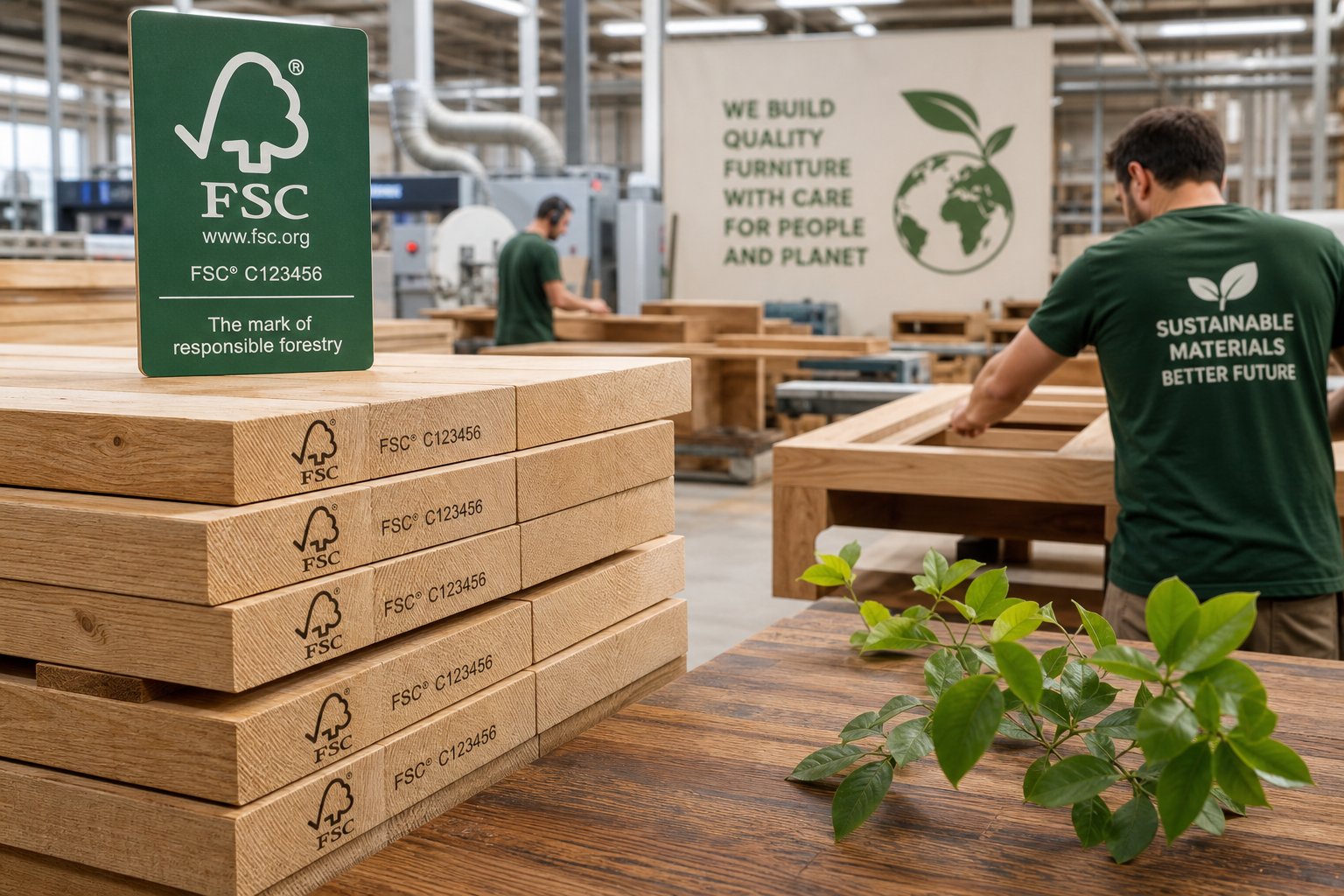
What FSC Certification Means
FSC certifies forests managed to environmental, social, and economic standards. Chain-of-Custody (CoC) certification tracks FSC material from certified forest through manufacturing to final product. A furniture factory must hold its own FSC CoC certificate to sell products labeled FSC—not merely use FSC lumber from an uncertified supplier.
FSC 100% vs FSC Mix vs FSC Recycled
FSC 100% means all wood fiber comes from FSC-certified forests. FSC Mix allows a controlled percentage of controlled wood and recycled content alongside certified material. FSC Recycled applies to post-consumer reclaimed wood. Your marketing claims and on-product labels must match the correct credit type on the transaction certificate.
FSC Label Types Explained
| Label Type | Content Requirement | Typical Furniture Use | Buyer Verification |
|---|---|---|---|
| FSC 100% | 100% certified forest material | Solid wood premium lines | CoC + invoice match |
| FSC Mix | Certified + controlled sources | Most case goods, plywood | Credit calculation on TC |
| FSC Recycled | Post-consumer reclaimed wood | Accent, industrial style | Reclaimed content docs |
| FSC Controlled Wood | Non-certified but risk-assessed | Component in Mix products | Supplier due diligence |
Verifying Your Chinese Supplier's FSC Status
Request the FSC certificate code and verify it on info.fsc.org. Confirm certificate scope covers your product type (e.g., furniture manufacturing), status is valid, and company legal name matches export documents. Ask for a sample transaction certificate (TC) from a recent shipment to see how credits are documented.
Transaction Certificates and Invoices
Each FSC shipment should generate a transaction certificate linking buyer, seller, product description, FSC claim, and quantity/volume. Importers need TCs for their own CoC if they repackage or relabel—or to satisfy retailer audits. Missing TCs break the chain and invalidate label use in regulated markets.
EU Deforestation Regulation (EUDR) Context
EUDR adds due diligence requirements beyond FSC for wood placed on EU markets. FSC certification supports compliance but may not alone satisfy all EUDR traceability fields. Importers should coordinate geolocation and supplier declarations with FSC documentation.
Common Compliance Mistakes
Using FSC logos without valid CoC, claiming FSC on only part of a product without Mix calculation, accepting expired certificates, and confusing factory FSC scope with trader certificates are frequent errors. Retail audits increasingly spot-check SKU-level documentation—generic factory certs are insufficient.
Cost and Sourcing Implications
FSC-certified lumber and plywood typically cost 5–12% more than conventional equivalents. Lead times may extend if certified stock is not warehoused. Plan annual volume to consolidate purchases and negotiate FSC premiums into long-term supply agreements rather than per-PO surprises.
Implementing FSC in Your Product Line
Start with hero SKUs where sustainability drives purchase decisions—dining tables, beds, office case goods. Train sales teams on correct label language. Build certificate archives per PO for retailer onboarding. Work with factories experienced in FSC material segregation to prevent mixing on production lines.
FSC certification is achievable for furniture importers sourcing from China when verification is rigorous and documentation is treated as a core deliverable. Responsible wood claims protect market access and build trust with increasingly informed B2B and retail buyers.
Training Your Team on FSC Claims
Sales and marketing staff must understand the difference between FSC 100%, Mix, and Recycled labels to avoid miscommunication with retailers. Create an internal reference sheet mapping each SKU to its valid claim language. Audit catalog copy annually—incorrect FSC statements are among the fastest ways to lose retailer vendor status.