Sustainable Furniture Materials Guide for Importers
Sustainable sourcing is no longer optional for furniture importers selling into Europe, North America, and Australia. Retail chains, e-commerce platforms, and corporate procurement teams increasingly require evidence of responsible materials. Chinese manufacturers have expanded eco-capable production, but material claims vary widely. This guide helps B2B buyers specify, verify, and document sustainable furniture materials with confidence.
Why Material Choices Matter for Your Brand
Furniture sustainability starts at raw material selection. Wood species, panel adhesives, foam chemistry, and metal sourcing all affect carbon footprint, indoor air quality, and regulatory compliance. Buyers who treat sustainability as a procurement requirement—not a marketing afterthought—reduce recall risk and strengthen retailer partnerships.
Regulatory Drivers
EU deforestation regulation, US Lacey Act enforcement, CARB Phase 2 formaldehyde limits, and UK Fire Safety requirements shape what materials factories can legally ship to each market. Confirm destination rules before finalizing BOM (bill of materials) with your supplier.
Wood and Engineered Panel Options
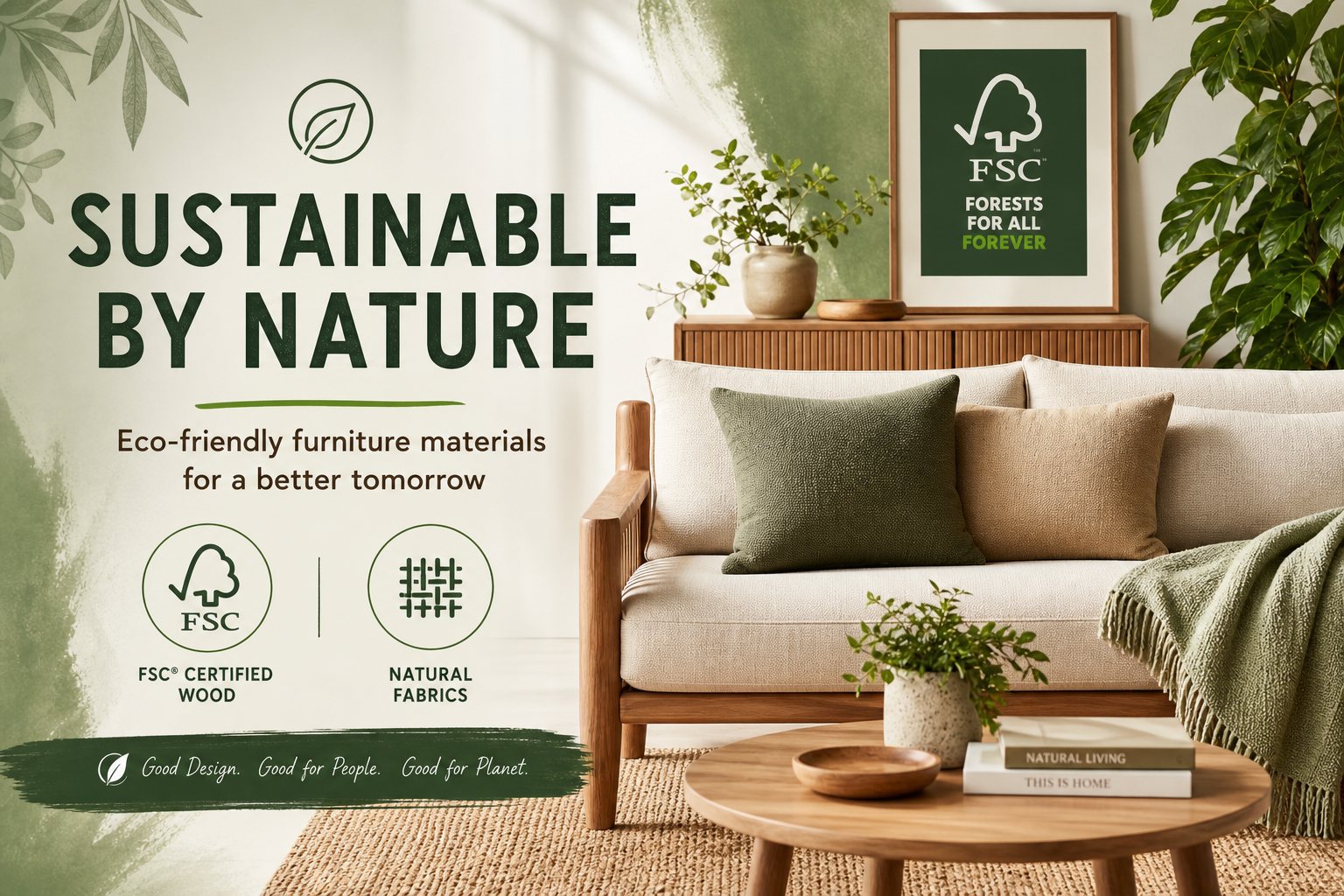
FSC-certified solid wood and plywood remain the gold standard for responsible forestry claims. E0 and E1 grade particleboard and MDF with low formaldehyde emissions suit case goods and office furniture at lower price points. Bamboo offers rapid renewability but requires correct labeling— it is a grass, not hardwood, which matters for marketing claims.
Sustainable Material Comparison
| Material | Certification | Typical Use | Verification Tip |
|---|---|---|---|
| FSC Solid Wood | FSC CoC chain of custody | Dining, bedroom, office | Request FSC certificate number on invoice |
| E0/E1 MDF & PB | CARB, EN 717-1 | Cabinets, desks, shelving | Lab test report per batch or annual |
| Recycled Steel / Aluminum | ISO 14001 factory audit | Chair frames, table bases | Ask for recycled content percentage |
| Organic / Recycled Textiles | GOTS, GRS, OEKO-TEX | Upholstery, cushions | Match cert to claimed fiber type |
Finishes, Adhesives, and Foams
Water-based lacquers and UV-cured coatings reduce VOC emissions compared to traditional solvent systems. Adhesive selection on panels directly affects formaldehyde off-gassing. For upholstery, HR foam density matters for durability, but also ask about flame retardant chemistry—some markets restrict specific chemical treatments.
Metal, Plastic, and Mixed Materials
Recycled aluminum and steel content is increasingly specified in commercial projects. Post-consumer recycled plastic works for outdoor and accent pieces but verify UV stability and load ratings. Mixed-material products need disassembly considerations for end-of-life recycling, especially for EU market expectations.
Supplier Audit Questions
During factory visits, ask how material batches are segregated, whether adhesives and finishes are logged by lot, and how rejected non-compliant panels are disposed of. Factories with mature environmental systems maintain batch traceability records that simplify your retailer audits.
Documentation Checklist
Collect material datasheets, certificate copies, test reports, and supplier declarations. Map each SKU component to its certification. Retailers often request this bundle during vendor onboarding—not at the last minute before shipment.
Evaluating Chinese Suppliers on Sustainability
Visit or audit factories for waste management, dust collection, and chemical storage—not just finished product. ISO 14001 environmental management certification signals process maturity. Ask whether sub-suppliers (foam, fabric, hardware) are vetted under the same standards. A sustainable final assembly line using uncertified panels fails buyer audits quickly.
Cost and MOQ Implications
Eco-certified materials typically add 5–15% to unit cost depending on category and volume. FSC wood premiums shrink at higher MOQ when factories consolidate lumber purchases. Plan seasonal buys to align with certificate renewal cycles and avoid mid-production material swaps.
Sustainable furniture sourcing is achievable from China when specifications are precise and verification is systematic. Build material requirements into your RFQ template, and treat certificates as contractual deliverables—not optional paperwork.
Communicating Sustainability to End Customers
B2B buyers increasingly need consumer-facing copy backed by evidence. Translate certificate data into clear product page claims—FSC Mix percentage, formaldehyde class, recycled content ratio—without overstating. Provide retailers a digital asset pack with certificate PDFs and test summaries to accelerate listing approval and reduce back-and-forth with compliance teams.